Home · Heat Cable & Ice Dams
Heat Cable & Ice Dam Prevention · Ogden & Northern Utah
Utah snow, freezing nights, and a warm attic add up to ice dams, and ice dams push water under your shingles. We install heat cable along the trouble spots, and tell you honestly if something else is the real fix.
An ice dam forms when heat escaping your attic melts the snow on your roof, and the meltwater refreezes at the cold eaves, building a ridge of ice that backs water up under your shingles and into the house. Heat cable (also called heat tape), installed in a zig-zag along the eaves and in valleys, gutters, and downspouts, keeps drainage channels melted open so water gets off the roof instead of backing up. It works, and it's one of the most common roof add-ons in Northern Utah for exactly that reason.
Why it matters here
Ice dams need three ingredients: real snow on the roof, freezing nights, and enough escaping indoor heat to melt from below. The Wasatch Front delivers all three every winter, especially on bench homes that catch heavier snow, on north-facing eaves that never see winter sun, and on older homes where attic insulation has settled or was never enough.
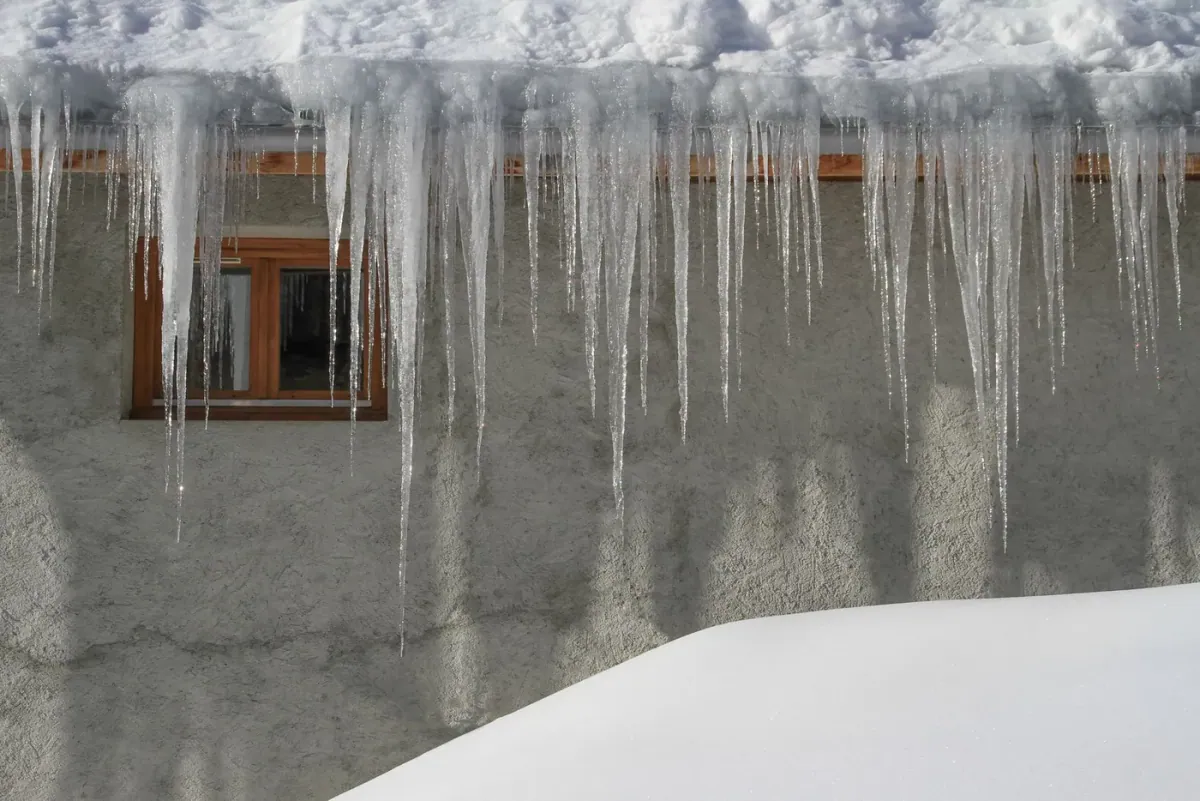
The damage doesn't look dramatic from outside. A ridge of ice and heavy icicles along the eaves, like the wall of ice in this photo, is the warning sign. Underneath, water is wicking up under the shingles, soaking the decking, and showing up as ceiling stains along exterior walls in February.
Warning signs
A few small icicles are normal. Thick rows of heavy icicles mean meltwater is refreezing right where it shouldn't.
A visible band of ice building along the gutter line is a dam already forming. Water is pooling behind it.
Water stains that appear or grow in winter, especially along exterior walls, are the classic sign water is getting under the shingles.
If you've had an ice dam once, your roof has proven it can happen. Heat cable installed before winter beats emergency ice removal in January.
The service
Best time to install is before the snow flies. Fall is ideal. It can be added to an existing roof or included when we do your replacement.
Heat cable manages the symptom, and it does that well. But if your attic is leaking serious heat, the root causes are usually insulation and ventilation. If that's what we see up there, we'll tell you, because fixing the cause can matter more than managing the melt.
See our roof ventilation & attic service →If water's already gotten in — stained ceilings, damp insulation, winter leaks — we'll find where it's coming through and fix the roof side of the problem.
See roof repair →Heat cable FAQ
It prevents the damage ice dams cause by keeping melt channels open along the eaves, valleys, and gutters so water drains off the roof instead of pooling behind ice. For most Utah homes it's the practical, proven fix.
Modern self-regulating cable draws more power in extreme cold and throttles down as it warms, and you only run it during snow-and-freeze stretches, not all winter. It costs money to run, but far less than repairing water damage.
Before or during snowfall, and through the freeze-thaw days that follow. Once the roof edge is clear of ice and snow, you can shut it off.
Hardware-store kits exist, but routing matters. Cable that skips the valleys or dead-ends short of the downspout just moves the problem. And walking a snowy or steep roof isn't worth the risk. We route it right and anchor it without damaging shingles.
Sometimes both. If your attic is dumping heat, insulation and ventilation are the root cause, and we'll tell you honestly what we see up there, not just sell you cable.
Free inspection
Tell us a little about your roof and we'll get right back to you. Prefer to talk now?
Calls returned within the hour · Mon–Sat
952 28th St, Suite D · Ogden, UT 84403
Serving Ogden & Northern Utah · Locally owned & operated
A free look at your roof, an honest recommendation, and a written price up front.