Sometimes. Homeowners insurance generally pays for a new roof when a sudden covered event caused the damage, like wind, hail, or a fallen tree, but not when the roof simply wore out. How much it pays depends on whether your policy settles at replacement cost or actual cash value. You always owe your deductible.
Written by Cameron Husom, owner of Compass Roofing in Ogden. Last updated July 2026.
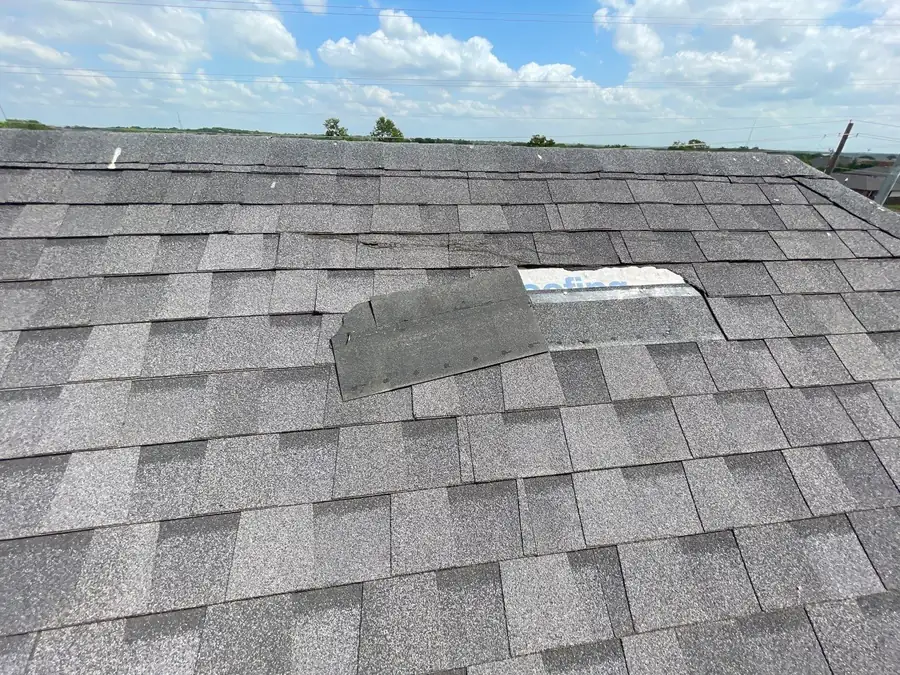
Almost everything turns on one distinction: sudden damage from a covered event, versus a roof that wore out. Insurance is built to handle the first and not the second.
Typically covered by a Utah homeowners policy:
Typically not covered:
When an adjuster climbs onto your roof, they are answering one question: did something happen to this roof, or did it simply get old? Everything else in the claim follows from that answer.
This is the part that catches people off guard, and it is worth knowing before you file rather than after the first check arrives.
Replacement cost value (RCV) pays what it costs to put a new roof on today. Actual cash value (ACV) pays what your roof was worth on the day it was damaged, after subtracting for the years it had already used up.
| What you are comparing | Replacement cost (RCV) | Actual cash value (ACV) |
|---|---|---|
| What it pays | Cost to replace the roof at today’s prices | The depreciated value of the roof as it stood |
| Deductible | You owe it | You owe it |
| Usually paid in | Two payments | One payment |
| Your gap on an older roof | Small | Can run into thousands |
The two-payment part of an RCV policy is what surprises people most. The insurer doesn’t hand over the full amount up front. The first check covers the depreciated value, minus your deductible. The rest, called recoverable depreciation, is released after the roof is actually replaced and the final invoice reaches the carrier.
That sequence is not a trick, it’s how the policy is written. It exists so the money goes into a new roof rather than into something else. But it does mean the first check will look smaller than the estimate, and knowing that in advance keeps it from feeling like a lowball.
How to find out which one you have: pull up your declarations page and look for the section labeled Loss Settlement. It will say whether roof surfacing is settled at replacement cost or actual cash value. If you can’t find it, your agent can tell you in about two minutes, and it is the single most useful thing to know before a storm rather than after one.
Because many carriers settle roof claims on a sliding scale tied to the roof’s age. The mechanism goes by names like a roof payment schedule, a roof surfacing endorsement, or a roof loss settlement schedule. It fixes what your roof is worth based on its age and material before anything ever happens to it, and it is typically written to apply only to wind and hail losses, so a fire claim on the same roof can still settle at full replacement cost.
In practice that means two houses on the same street, hit by the same storm, with the same shingle, can get very different checks if one roof is six years old and the other is nineteen.
This is also why coverage can change without you noticing. A carrier can attach a roof endorsement at renewal that moves roof surfacing from replacement cost to actual cash value while the premium barely moves. If your policy carries one, it will be named among the endorsements on your declarations page. The renewal packet is dull reading, but the loss settlement language is the part worth two minutes of your attention every year.
Everything above is about what a policy pays. Roof age also affects whether some carriers will keep writing the policy at all, which is a separate question with its own thresholds and its own letters. That side is covered in can your insurance company drop you over your roof’s age.
Your deductible is the portion you pay on any approved claim. It comes in two shapes:
A flat dollar amount. Whatever figure is printed on your declarations page, commonly somewhere between $500 and $2,500. Straightforward: that number comes out of the payout.
A percentage. Some policies set the deductible as a percentage of your coverage instead of a flat figure. The detail that trips people up is what the percentage applies to. It is a percentage of your dwelling coverage limit, not your home’s market value. On a policy with a $500,000 dwelling limit, a 1 percent deductible is $5,000 and a 2 percent deductible is $10,000. The gap between those two lines on your policy is worth finding before a storm, not after.
Some policies also carry a separate, higher wind and hail deductible than the one that applies to everything else. Check for that specifically, because a roof claim is exactly when it applies.
Whatever shape it takes, the deductible is yours to pay. Which leads directly to the next part.
Here is the honest version of the job, and it is a smaller job than some companies imply.
What a roofer should do:
What a roofer should never do:
Offer to waive, cover, or absorb your deductible. The Utah Insurance Department’s own consumer flyer on roofing scams puts it plainly: “Offering to waive deductibles may be illegal.” The reason is mechanical. For your deductible to disappear while the roofer still gets paid in full, the invoice sent to your insurer has to show a number you didn’t actually pay. Under Utah Code 31A-31-102(8), an invoice and an estimate of property damage both count as a “statement,” and 31A-31-103(1)(b) makes it a fraudulent insurance act to present a statement in support of a claim, with intent to deceive or defraud, knowing it contains false or misleading information material to that claim. Worth sitting with: it is your claim and your name on it, so an offer that sounds like a favor puts you in the exposed seat, not the roofer.
Promise your claim will be approved. Nobody outside your insurance company can make that call, and anyone promising it is either guessing or selling. What a roofer can genuinely stand behind is their own work, their own pricing, and their own timeline.
Negotiate or settle the claim on your behalf. In Utah, adjusting or negotiating insurance claims for someone else for compensation is licensed work. A roofer documents damage, provides a scope, and meets the adjuster. You file your claim and you settle it.
Push you to sign before you understand what you’re signing. The same state flyer warns homeowners to “read contracts carefully and avoid signing away your rights to your insurance coverage to third parties,” and to be wary of “demands for high advance payments for work.” Both are worth taking seriously, especially from a company that showed up after a storm and isn’t from here.
That’s how we work it: we document the damage thoroughly, meet your adjuster on the roof, complete the job to the approved scope, and back the workmanship in writing. You file with your carrier and pay your deductible. No part of that requires anyone to be creative with paperwork.
Not always, and a roofer telling you it isn’t should raise your trust rather than lower it.
Many storm repairs run $500 to $2,500. If the fix is likely to land under your deductible, filing gets you nothing and puts a claim on your record anyway. You’d pay roughly the same either way.
The math flips when damage is widespread enough that the honest answer is a replacement rather than a patch. A full asphalt replacement in Northern Utah typically runs $12,000 to $30,000, which is well past any deductible you’re likely to carry.
The sequence that serves you best is simple: get the roof documented first, then decide whether to file. Once you’ve called it in, it’s on your record whether or not it goes anywhere.
If a storm has come through and you want to know which side of that line you’re on, a free roof inspection settles it with photos, and our storm damage page covers how we document the damage, meet your adjuster on the roof, and complete the repair.
Common questions
It's the part of your payout the insurer holds back until the work is done. On a replacement cost policy, the first check is the depreciated value of the roof minus your deductible. The withheld amount is released after the roof is actually replaced and your contractor's final invoice goes to the carrier. Two things trip people up: it is not automatic, someone has to send in the completion paperwork, and most carriers set a deadline to claim it, often somewhere between six months and a year from the date of loss. Your policy states the exact window, so ask your adjuster for it in writing when you get the first check.
No. Carriers often keep a preferred contractor list and there is nothing wrong with those companies, but choosing one is your call, not a condition of the claim. What the insurer decides is how much the job is worth, not who does it. Pick the roofer you'd want back at your house in five years if something needed attention, then have them work to the approved scope.
No, and this is the most common reason a roof claim gets denied. Homeowners policies cover sudden accidental damage, not the roof reaching the end of its life. A 25-year-old asphalt roof with cracked, curling shingles and no storm behind it is a maintenance expense. Where it gets less obvious is an older roof that also took real hail or wind, since an adjuster then has to separate storm damage from age. That is exactly why dated photos taken close to the storm matter so much. More on how long a roof actually lasts here.
You can keep the first payment, but you give up the rest. The withheld depreciation is only released once the work is finished, so skipping the repair means settling for the depreciated amount. Two other things to weigh: if you have a mortgage, your lender is often named on the claim check and can require proof the work was done, and leaving documented damage on the roof can complicate a future claim on the same roof. If money is the obstacle, say so out loud when you get your estimate. Sequencing the work is a normal conversation.
That happens often, since a storm arrives from one direction and works over the slopes facing it. One local wrinkle worth knowing: Northern Utah's damaging canyon winds are easterly downslope events that gust out of the canyon mouths toward the valley, so the east-facing planes frequently take the worst of a wind event rather than the west. An adjuster may approve repairs to the damaged slopes rather than the whole roof. Whether that is the right answer depends on real things: whether your shingle is still made, whether a partial repair will match, and whether the undamaged slopes are sound. Those are questions worth walking through with someone who has been on the roof and can show you photos of each slope.
More guides
How long a roof lasts in Northern Utah by material, why our freeze-thaw winters and canyon wind shorten it, and the signs that yours is near the end.
How to tell if your roof is failing: what to look for from the ground, in the gutters, and in the attic, plus the common signs that don't mean you need a new roof.
When a roof repair is the right call and when it's throwing money at an old roof: how age, extent, and repeat repairs decide it, with real Northern Utah costs.
Free inspection
Tell us a little about your roof and we'll get right back to you. Prefer to talk now?
Calls returned within the hour · Mon–Sat
952 28th St, Suite D · Ogden, UT 84403
Serving Ogden & Northern Utah · Locally owned & operated
Free inspection, photos of what we find, and no pressure.