In Northern Utah, repair when the damage sits in one place, the roof is under about fifteen years old, and the rest of it is sound. Replace when the problem keeps returning in new spots or covers whole slopes. Age alone is not the trigger: age, extent, and repair history decide it together.
Written by Cameron Husom, owner of Compass Roofing in Ogden. Last updated July 2026.
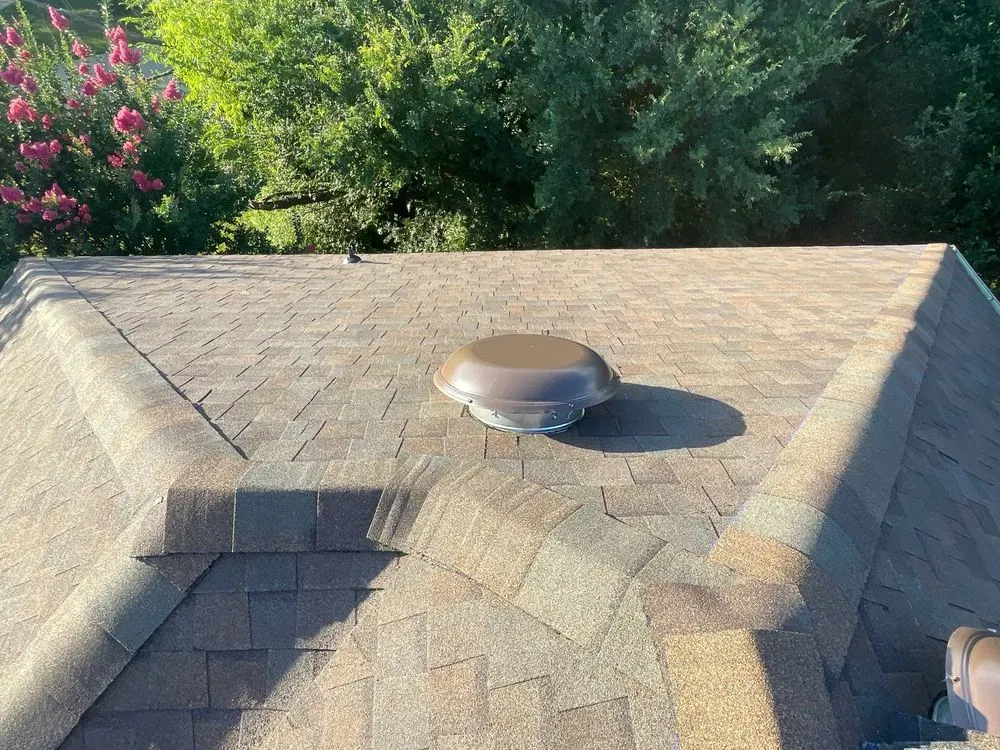
Three things, in this order. Almost every honest repair-or-replace call comes down to them.
Age. How much service life is left in the shingles around the damage.
Extent. Whether the problem is in one place or showing up across the roof.
History. How many times you have already fixed something on this roof.
Everything else, the leak’s location, the shingle brand, what the neighbor did, is detail on top of those three.
| What you are weighing | Points to a repair | Points to a replacement |
|---|---|---|
| Roof age | Under 15 years | Deep into its expected life |
| Where the damage is | One spot, one slope | Multiple slopes, or spreading |
| Repair history | First time | Third call in a few years |
| What’s underneath | Decking sound | Soft decking, sagging |
| The failure | Flashing, a few tabs, one leak | Granules gone, shingles brittle roof-wide |
More often than the internet suggests, and more often than a salesman at your door will tell you.
Flashing and penetrations. The metal and sealant around chimneys, vents, skylights, and valleys is the most common source of leaks on any roof, and it is almost always a repair even on an older roof. This is also the single most over-sold “you need a new roof” in the trade. If someone quotes a full replacement for a flashing leak without walking you through why the rest of the roof has to come off, get a second opinion.
Storm damage in one area. A windstorm that took tabs off one slope of an otherwise healthy roof is a repair, and depending on the storm it may be a claim. Our guide on whether insurance covers a new roof covers how that gets decided.
A young roof with a specific problem. Under fifteen years, with sound decking and one identifiable failure, repairing is nearly always the better spend.
Getting through a winter deliberately. If the roof needs replacing but the timing is wrong, a repair that stops active water intrusion is a legitimate move, as long as everyone is honest that it is a bridge rather than a fix.
The same problem keeps coming back somewhere new. This is the clearest signal on the list. The first repair is maintenance. By the third one in a third spot you are not fixing three problems, you are watching one problem surface in three places, and every dollar after that goes onto shingles that are aging out from underneath the work.
Whole slopes are involved. Shingles lifting or losing granules across entire planes, rather than in one patch, means the sealant bond and the surface are going roof-wide.
Something structural. Sagging, soft or spongy decking, or daylight through the boards. Shingles cannot fix what is underneath them.
The shingles have gone brittle. On a roof deep into its life, shingles crack when they are lifted. At that point a repair damages as much as it fixes, which is a genuine physical limit rather than a sales line.
For what each material realistically gives you before it gets there, see how long a roof lasts in Northern Utah. And if you are still working out whether you have a real problem at all, the signs worth checking comes first.
Real numbers, because the decision is hard to make without them.
A roof repair runs $500 to $2,500 in our area for the common jobs: flashing work, wind damage, a leak traced and fixed.
A full asphalt replacement runs $12,000 to $30,000, backed by a written 10-year transferable workmanship warranty. What that job actually involves is its own walkthrough.
The gap between those looks enormous, which is exactly why the repeat-repair math matters. Three repairs over four years on a roof already past twenty can land anywhere from $1,500 to $7,500, and at the end of it you still have a roof past twenty. That is the calculation worth running before the third call, not after it.
The honest framing: a repair on a roof with life left is one of the best-value things you can spend money on. The same repair on a roof at the end of its life is rent, not investment.
This is the fear that keeps people from starting, and it is worth defusing.
You usually do not find out until the old roof comes off, which makes this a replacement question rather than a repair one. On an older roof it is normal to open it up and find a sheet or two of soft decking. On a full replacement we replace up to four sheets at no charge, which covers the vast majority of normal decking problems. If a roof needs more than that, every bad sheet gets photographed and the added cost goes in writing before anything is replaced. You approve it first. Nothing appears in the final bill that you have not already seen and agreed to.
That policy exists because “we’ll see what we find” is how homeowners get surprised, and a surprise on a roof you cannot see is the worst kind.
Four things that separate a straight answer from a pitch.
They got on the roof. A verdict delivered from the driveway is a guess. Anyone recommending a replacement should have been up there.
They have photos. You should see what they saw, and you should keep those photos whether you hire them or not.
They can explain why a repair won’t work. “It’s old” is not a reason. “These shingles crack when I lift them, here is a photo of one I lifted” is a reason.
They are willing to say you’re fine. The tell of an honest roofer is how often the answer is “not yet.” A company that finds a replacement on every roof it inspects is not inspecting.
If you want that kind of answer on your own roof, a free inspection gets you photos and a straight verdict, and our repair page covers what the work itself involves when a repair is the right call.
Common questions
A properly done repair on a sound roof should last as long as the roof around it. Flashing work, a handful of replaced shingles, a resealed pipe boot: none of those are temporary if they are done right. What makes a repair feel temporary is doing it on a roof that has already aged out, where the new work is fine but the shingles beside it keep failing. That is the difference between a repair that solves something and a repair that buys you a season.
Often yes, and on a storm claim that is frequently what gets approved, since insurers scope by the slopes that were actually damaged. The questions worth asking first: is your shingle still manufactured, will the new work match closely enough to live with, and are the other slopes genuinely sound? A single-slope repair on an otherwise healthy roof is a good outcome. The same repair on a roof where the other three slopes are two years behind it is just the first of four bills.
A repair does not void it by itself, but there is a step people miss: tell the manufacturer before the repair happens, and keep photos of the damage. Fixing a problem before it has been reported can cost you the claim, and once the work is done the evidence is gone. It is also worth knowing what the coverage actually is, because it is broader than most people assume in one direction and narrower in another. Manufacturer warranties cover defects in the shingle, and they usually include wind blow-off for a set period, commonly around fifteen years, up to a wind speed that depends on how the shingles were nailed and whether matching starter strip was used. Owens Corning, for instance, rates blow-off coverage higher for a six-nail pattern with their starter than for a four-nail one. What they do not cover is workmanship or ordinary wear, and most step down to a prorated amount after the first several years. Inadequate ventilation is excluded by the major manufacturers, which in practice matters more than any repair does. Our warranty page lays out the difference between their coverage and ours.
Say so out loud when you get the estimate, because it changes what we recommend rather than whether we help. There is often a legitimate middle path: fix what is actively letting water in now, get the roof through the winter, and plan the replacement for a season you choose rather than one a leak chooses for you. What we will not do is quietly sell you a patch while knowing the roof needs replacing, or tell you a roof is finished when it isn't. Both are the same dishonesty pointed in different directions.
Talk to your agent before you decide, because this is a market question as much as a roof question. What is generally true: a roof at the end of its life tends to come up in the inspection either way, and buyers often ask for more off the price than the repair would have cost. A sound roof with a documented repair is an easy conversation. An old roof with fresh paint over the problem is the one that costs you at closing. If we inspect it, you get the photos regardless, and those are useful to hand a buyer.
More guides
When homeowners insurance pays for a roof replacement in Utah, how ACV and RCV policies differ, why your roof's age changes the payout, and what you always owe.
How long a roof lasts in Northern Utah by material, why our freeze-thaw winters and canyon wind shorten it, and the signs that yours is near the end.
How to tell if your roof is failing: what to look for from the ground, in the gutters, and in the attic, plus the common signs that don't mean you need a new roof.
Free inspection
Tell us a little about your roof and we'll get right back to you. Prefer to talk now?
Calls returned within the hour · Mon–Sat
952 28th St, Suite D · Ogden, UT 84403
Serving Ogden & Northern Utah · Locally owned & operated
Free inspection, photos of what we find, and no pressure.